
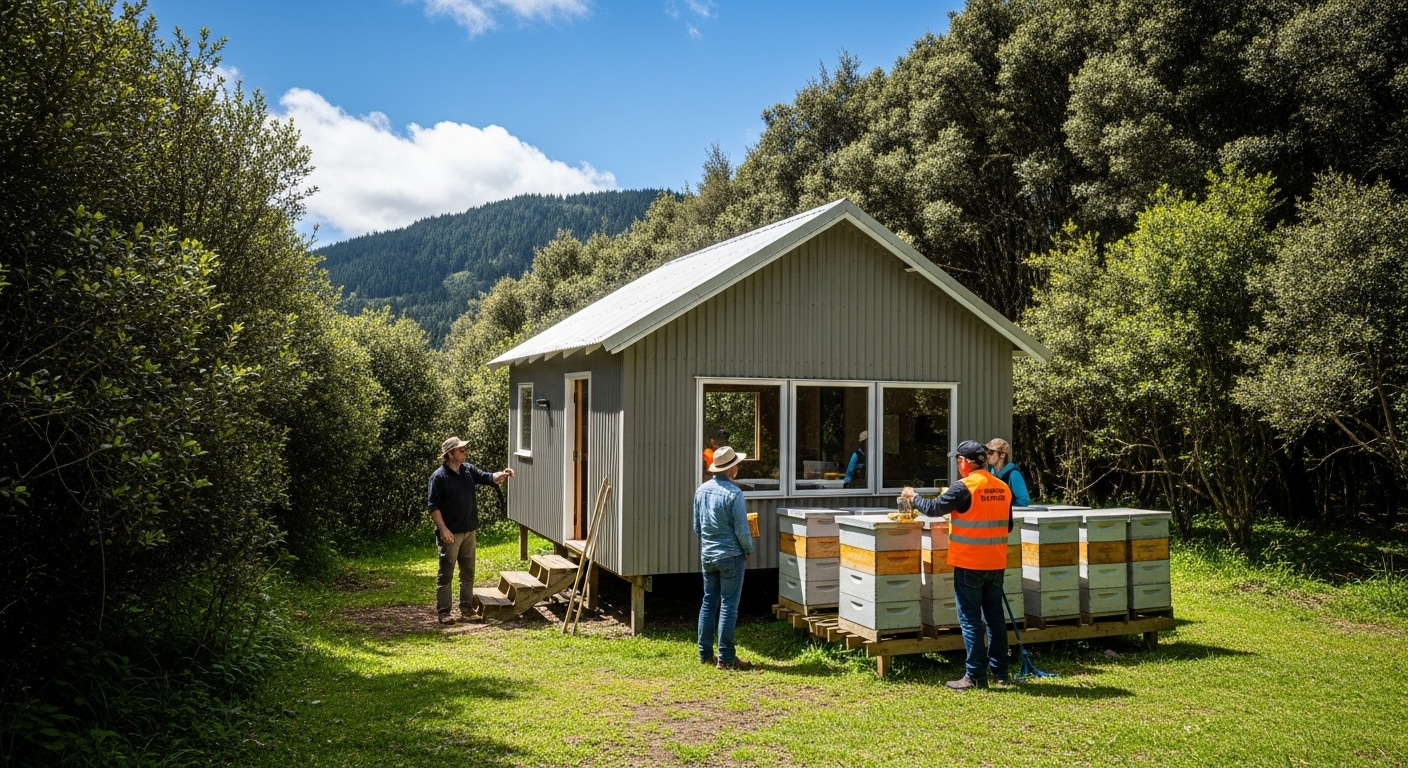
Dr. Moran’s research emphasized that the Leptospermum scoparium variant known as “Incanum” yields the nectar with the highest activity levels. With this knowledge, I dedicated myself to scouting mountainous regions densely populated with wild Manuka forests of this specific variant and constructing a beekeeping farm there. The apiary spans a vast 125-acre area, equivalent to about 11 Tokyo Domes, surrounded by miles of pristine Manuka forests that completely blanket the whole mountainous area. This remote location offers an ideal environment for honeybees, far from paved roads or farmland. The only sounds are the rustling of the wind and the buzzing of bees, making it a beekeeping paradise.
However, this ideal location came with significant challenges during the initial construction of the apiary. During the rainy season, the clay-rich mountain roads would turn into a muddy mess, making it impossible even for off-road 4WD vehicles to reach the site. I often had no choice but to drive as far as possible, then carry bee boxes on my shoulders, and walk the 6-kilometer round trip multiple times. There were times when a vehicle loaded with beehives on a trailer slipped off the roadside, and it was only with the help of an onboard winch and by anchoring to the road that we were barely able to inch forward. While driving a 30-kilogram iron anchor into the hillside, thunder would sometimes rumble, and when I looked around, I realized there was nothing taller than me in sight— it was a deeply unsettling, even frightening experience. There were times when I wanted to stay at a roadside motel but was turned away because I was covered in mud. Nowadays, the road has been repaired and reinforced with gravel for several kilometers, and even a regular car can reach the site. Looking back, those days feel almost like a dream.
This apiary has become the most productive site for harvesting exceptionally high-activity Manuka honey among the multiple apiaries we operate across other regions. It is, in essence, the homeland of the Leptospermum scoparium incanum variety of Manuka trees. The area is so well-suited to Manuka trees that even after clearing older, long-established trees to create multiple apiary locations, the land quickly regenerates into a thriving Manuka forest as seeds naturally take root. When beehives from other apiaries are relocated to this site, the bee colonies quickly strengthen, and the moment the hive seals are opened, the bees burst into life, circling energetically in the air like fish in water. Every time I see that sight, I’m filled with the feeling that choosing this land was the right decision. This region, with its rich source of Manuka nectar, represents the true origin of authentic Manuka honey. Remarkably, the Incanum variety of Manuka trees seems to thrive only in harsh, uninhabitable environments where humans can scarcely survive.
ركزت أبحاث الدكتور موران على أن نوع Leptospermum scoparium المعروف باسم “إنكانوم” يعطي رحيقًا بأعلى مستويات النشاط. مستفيدًا من هذه المعرفة، كرّست نفسي لاستكشاف المناطق الجبلية الكثيفة بغابات المانوكا البرية من هذا النوع المحدد، وبناء مزرعة تربية نحل هناك. تمتد المزرعة على مساحة شاسعة تبلغ 125 فدانًا، أي ما يعادل حوالي 11 ملعبًا طوكيو دوم، تحيط بها أميال من غابات المانوكا البكر التي تغطي الجبال بالكامل. يوفر هذا الموقع النائي بيئة مثالية للنحل، بعيدًا عن الطرق المعبدة أو الأراضي الزراعية، حيث لا يسمع سوى صوت الرياح وهمهمة النحل، مما يجعلها جنة لتربية النحل.
ومع ذلك، جاء هذا الموقع المثالي مع تحديات كبيرة أثناء إنشاء المزرعة في البداية. خلال موسم الأمطار، تتحول الطرق الجبلية الغنية بالطين إلى وحل مستحيل، حتى سيارات الدفع الرباعي غير قادرة على الوصول إلى الموقع. كثيرًا ما اضطررت للقيادة قدر الإمكان، ثم حمل صناديق النحل على الكتفين، والمشي لمسافة 6 كيلومترات ذهابًا وإيابًا عدة مرات. في أحيان كثيرة، كانت مركبة محملة بصناديق النحل تنزلق عن الطريق، ولم نتمكن من التقدم إلا بمساعدة رافعة مثبتة على المركبة وتثبيتها بالطريق. أثناء تثبيت مرساة حديدية بوزن 30 كيلوغرامًا في الجبل، كان الرعد يدوي أحيانًا، وعندما أنظر حولي، أدرك أنه لا يوجد شيء أعلى مني في الأفق—كانت تجربة مقلقة ومخيفة للغاية. أحيانًا رغبت في المبيت في نزل على جانب الطريق لكن تم رفضي لأنني كنت مغطى بالوحل. أما اليوم، فقد تم إصلاح الطريق وتقويته بالحصى لعدة كيلومترات، ويمكن لأي سيارة عادية الوصول إلى الموقع. بالنظر إلى الماضي، تبدو تلك الأيام وكأنها حلم بعيد.
لقد أصبحت هذه المزرعة الموقع الأكثر إنتاجية لجمع عسل المانوكا عالي النشاط بين المزارع الأخرى التي نديرها في مناطق متعددة. إنها، في الجوهر، موطن نوع Leptospermum scoparium incanum من أشجار المانوكا. المنطقة ملائمة جدًا لأشجار المانوكا، لدرجة أنه حتى بعد إزالة الأشجار القديمة لإنشاء مواقع متعددة للمزارع، تعاود الأرض بسرعة النمو لتصبح غابة مانوكا مزدهرة حيث تتجذر البذور طبيعيًا. وعندما تُنقل خلايا النحل من مزارع أخرى إلى هذا الموقع، تتقوى مستعمرات النحل بسرعة، وعند فتح أختام الخلايا، تنطلق النحل في الهواء بحيوية، تدور مثل الأسماك في الماء. كل مرة أرى هذا المشهد، أشعر بأن اختيار هذه الأرض كان القرار الصائب. تمثل هذه المنطقة، بمصدر رحيقها الغني من المانوكا، الأصل الحقيقي لعسل المانوكا الأصيل. والمذهل أن نوع “إنكانوم” من أشجار المانوكا يبدو أنه يزدهر فقط في بيئات قاسية لا يمكن للبشر العيش فيها بسهولة.