
During the remaining year until graduation, I engaged in lecture activities with two other members of the South America dispatch research team, targeting high school audiences. Standing before more than a thousand students gathered in the auditorium, I shared my experiences of the remote Amazon basin, which was still a rare topic at the time. This initiative was a way to give back to society in gratitude for the grants and sponsorships we had received. My student life passed by in the blink of an eye, and I once again became a traveler on the South American route.
The journey to making natural bioactive substances my profession was far from straightforward. It began with substances like the bark of Ipê-Roxo, an Amazonian tree known for its traditional anti-cancer properties, and the roots of Muirapuama, long used as a tonic. Eventually, through an introduction from a relative in the import business, I saw potential in propolis for the Japanese market. This led me to begin producing and sourcing raw propolis. Looking back now, it’s clear that any entrepreneurial venture starts from the humblest beginnings. My initial tools of the trade were no more than a small handheld broom, a dustpan, a sieve, and a household fan. Yet, this marked the starting point of TCN Co., Ltd. Needless to say, at its foundation was the inspiration drawn from the natural bioactive substances of the Amazon River and the wisdom of the forest’s inhabitants, as I previously mentioned.
Propolis is a resinous substance collected by honeybees from tree resins. During the peak of the season, a single colony can consist of up to 60,000 bees, all living and working together in a confined space that must be kept in optimal condition. Propolis plays a crucial role in this process: bees use it to fill gaps within the hive, protecting it from potential invaders and preventing the growth of harmful bacteria and fungi. Tree resins, which are naturally rich in antimicrobial compounds, form the base of propolis. Bees enhance its protective properties by adding their own secreted enzymes, further boosting its effectiveness as a defense mechanism.
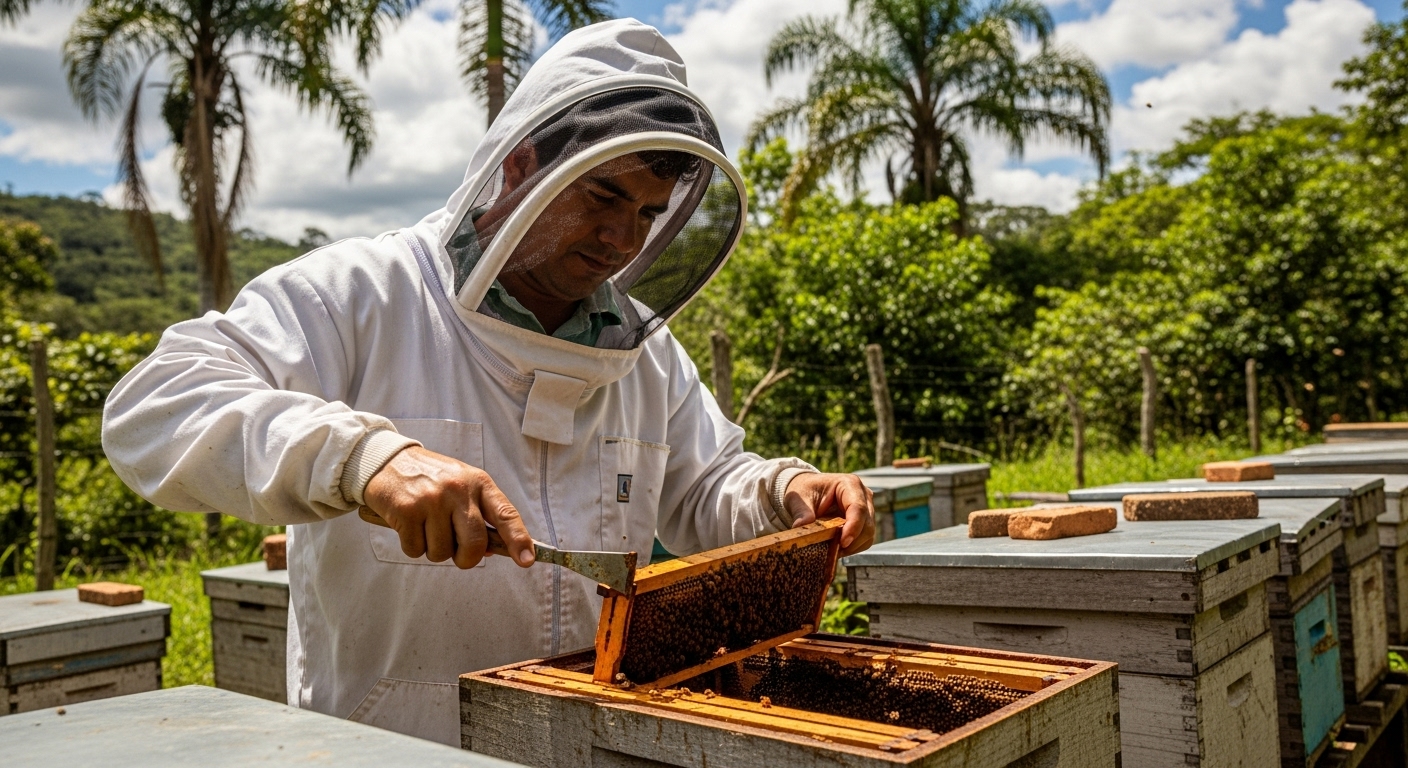
Honeybees are believed to have emerged simultaneously with the appearance of flowering plants. Over tens of millions of years of history, honeybees are thought to have developed a genetic ability to identify which types of tree resins excel in antibacterial and antiviral activity. We extract these active compounds using ethanol as a solvent and utilize them as health supplements. The raw propolis material (hereinafter referred to as raw propolis) removed from beehives contains various impurities. Fresh raw propolis tends to be sticky and soft with more impurities. It is necessary to carefully scrape off these impurities one by one with a small knife to increase its purity. Most of impurities are removed using a hive tool, an essential instrument for beekeepers, which has a sharp, chisel-like tip designed for scraping.
During this process, wood fragments from the hive are removed along with the propolis, and other impurities such as dead bees, paint applied to the hive, and beeswax are also present. To achieve the highest possible purity, meticulous work is required to separate these impurities from each raw propolis using sieves and fans. This labor-intensive task ensures that the raw propolis are as clean as possible. At the production site, a sheet is typically laid on the ground, where hive-attached propolis and wax are roughly removed. As a result, various impurities from the site can mix in during the collection process. (Blog: Hive Tools and Propolis ⇒ Hive Tools and Propolis – Strong MANUKA HONEY)
The raw propolis, with as many impurities removed as possible, were then packed into bags and prepared for shipment. At that time, the funds were far from abundant, whether it was for payments made for products produced in-house or raw propolis purchased from beekeepers. I remember transporting the products to the warehouse of a natural food company from Japan in São Paulo, which was 400 km away, using a bus. Along the way, I often saw scenes of quarry workers using conveyor belts to sort the size of crushed stones at a stone crushing site. Each time I passed by that site, I found myself wishing I could process raw propolis of that size mechanically. At that time, the raw propolis I was carrying in the bus trunk were barely around 20 kg at most. But I dreamed of handling at least 100 kg per unit, ideally in ton-scale work.
At the time, Brazil’s economy was experiencing hyperinflation, reaching an annual rate of 10,000%. As a foreigner living in this country, I truly admired its unique national sentiment, marked by kindness and the fact that it had the largest Catholic population in the world. However, on the other hand, when it came to the harsh realities of work and economic development, the challenges were beyond imagination. It was impossible to place any trust in the country’s financial institutions.
Since the trade involved only a small quantity of raw propolis, the only way to sell more was to increase the number of transactions. I was completely absorbed in sourcing and delivering raw propolis, from dawn until dusk. Luckily, a company from Japan, recognizing the growing demand for propolis in Japan, was eager to buy as much raw material as possible and asked me to bring as much as I could. To meet this demand, I gave everything I had, working at full power, even without sleep, to keep up with the workload.
Across the vast Brazilian continent, 24 times the size of Japan, I traveled through day and night, covering thousands of kilometers by car to collect raw propolis. During nighttime drives, I navigated by the Southern Cross visible in the heart of the continent. When hunger struck, I stopped at roadside diners located roughly every 100 kilometers, popular with truck drivers. These stops not only satisfied my appetite but also served as resting points, where I would take short naps in the parking lots, sandwiched between large trucks and trailers, before continuing my long journey. For truck drivers whose work involves monotonous long-distance travel, meals on the road are a significant pleasure. Diners with large numbers of parked trucks never served bad food. A specialty was churrasco, Brazil’s unique barbecue, featuring nearly 10 kilograms of beef chunks skewered on sword-like spits. Staples like pork, chicken, sausages, and even wild game such as capybara—now a beloved animal in Japanese zoos—were also common. The meats were brought to the table one after another, and diners could choose their desired cuts, carved to order with large knives and cooked to their preferred level of doneness.
The more the knife is inserted, the rarer the meat becomes, and the waiters know exactly how to slice it to match the customer’s preferences. The meat is then returned to the original charcoal grill, ensuring that this cooking method uses the entire meat block efficiently. Seasoning varies by region, with the southern parts leaning heavily on rock salt, similar to Argentine-style. It’s typically an all-you-can-eat buffet, similar to the Japanese-style buffet. This Brazilian barbecue provides a very satisfying feeling of fullness that differs from grain-based meals. Even now, this Brazilian-style barbecue is a staple at my home, using locally sourced Manuka wood for fuel, which adds a unique flavor that surpasses even the authentic taste.
Whenever I managed to grab a little sleep, I’d hit the road again toward my destination. Sometimes, it took 30 minutes to realize that I was heading in the wrong direction and had to painfully turn back. Occasionally, the headlights of oncoming cars appeared like distant mirages, seeming to take forever to approach. Even though we were each driving at 100 km/h, the combined speed was 200 km/h, highlighting just how vast the scale of the continent was. In the Southern Hemisphere, the North Star isn’t visible, but the Southern Cross constellation should serve as a directional guide. However, there’s no direct equivalent star marking the way, so you rely on the general direction of the Southern Cross. Now that I live in New Zealand, seeing the Southern Cross reminds me of those vast nighttime journeys across the Brazilian continent, relying on that star to gather raw material.
However, if I were to visit each and every beekeeper in such an enormously vast country like Brazil, I would never get anything done. If I could manage to visit just three beekeepers a day, that would be a success. Realizing the inefficiency of this approach, I abandoned it and switched to a phone strategy. I systematically tracked down beekeepers across Brazil and pleaded with them, saying, “If you have raw propolis, please sell it to me.” I then asked for their bank account details and immediately transferred the amount they requested — to complete strangers! My Brazilian friends were bewildered, saying things like ‘I can’t believe this…’ and ‘Are you crazy?!’ I have to admit, I felt the same way. In Latin society, lending money almost always means never getting it back.
However, contrary to expectations, within just a few days, the exact amount of raw propolis would reliably arrive, providing a sense of relief. This method proved highly successful, enabling an incredibly efficient procurement operation without ever stepping out of my home. It was like running a high-speed miniature engine. The buyers in Japan, mainly product manufacturers, paid almost immediately upon delivery of the raw propolis. This strategy paid off, and my working capital grew rapidly. At the same time, I established connections with major Japanese manufacturers, further accelerating the pace of raw propolis procurement. Only the highest-quality and most flawless products were shipped out.
Of course, there were considerable losses as well, but as I continued purchasing raw propolis from various regions, I gradually developed a quality map of the production areas. This allowed me to narrow down the regions for procurement. Then, an extraordinary event struck Brazilian society—a shocking and severe inflation crisis. Salaried workers, for instance, would spend their entire paychecks on essential goods the moment they were paid. This was a matter of survival, as prices skyrocketed daily, and no one could afford to hold onto money that rapidly lost its value. Then, one day, out of the blue, a presidential decree in Brazil imposed a bank freeze. People could only withdraw the bare minimum necessary to survive, leaving most unable to manage their daily lives.
As a foreigner, I had always sensed that such an event was entirely possible. I had already transferred all my savings to a U.S. bank account and ensured that payments for the raw propolis I shipped to Japan were settled in U.S. dollars through the same account. As a result, competing buyers were unable to conduct any transactions due to their funds being frozen, leaving me in a position to exclusively purchase all the raw propolis.
The beekeepers were also severely impacted by the bank freeze, and when it came to raw propolis, a peculiar sense of trust had already formed across the country—the beekeepers knew that if they sold to me, they would receive prompt and guaranteed payment. In 1989, the 32nd International Apicultural Congress was held in Rio de Janeiro, my hometown at the time, drawing beekeepers from around the globe. Many Brazilian beekeepers also attended, traveling from rural areas to participate. I set up a booth at the venue to introduce raw propolis and had the opportunity to shake hands for the first time with many beekeepers I had only ever dealt with over the phone. Although these were people I had spoken with regularly, meeting them in person was a first. I invited everyone to a meal, and in the evenings, I took them to enjoy Rio’s famous nightlife, including cabarets, samba, and bossa nova shows. They were all wonderful people, and I was filled with confidence that I had become a leading figure in this field—or so I thought, at least until the congress concluded.
My second tailwind came in October 1991, during the 51st Annual Meeting of the Japanese Cancer Association. At this event, a joint research group, led by Dr. Tetsuya Matsuno, the head of the Virus Laboratory at the National Institute of Health (now the National Institute of Infectious Diseases), and Kyowa Hakko Kogyo Co., Ltd. (now Kyowa Kirin Co., Ltd.), presented findings on the anti-cancer effects of extracts from Brazilian propolis. This sparked widespread media coverage, propelling propolis into the spotlight and rapidly increasing its popularity. Coincidentally, this period marked the end of Japan’s bubble economy. Those who had profited during the bubble began searching for their next investment opportunities. It seemed they saw great potential in propolis and poured their capital into utilizing the highest-quality raw propolis , aiming to recover from the financial damage incurred during the economic collapse.
An overwhelming number of offers for raw propolis poured in from Japan. Naturally, I devoted myself wholeheartedly to collecting and shipping them. When I first started this venture, my methods were humble—using a handheld broom, dustpan, and fan, and personally transporting a mere 20 kilograms of raw propolis by a 400-kilometer bus ride to São Paulo. Along the way, I once glanced out the bus window at a quarry’s conveyor belt and dreamed, “One day, I’d like to handle that kind of volume of propolis.” That dream became a reality. Eventually, exports of raw propolis from Brazil to Japan reached several tons per month, with me handling 60-70% of Japan’s total import volume.
خلال العام المتبقّي حتى التخرّج، شاركتُ عضوين آخرين من فريق البحوث المبتعث إلى أمريكا الجنوبية في إلقاء محاضرات مخصّصة لطلاب المدارس الثانوية. كنت أقف أمام ما يزيد عن ألف طالب اجتمعوا في قاعة كبرى، لأحدّثهم عن مشاهداتي في أعماق حوض الأمازون النائي—وهو موضوع كان نادراً آنذاك. وقد كانت تلك المبادرة تعبيرًا عن امتناننا للمنح والدعم الذي تلقيناه، ومحاولة لردّ الجميل للمجتمع. مرّت حياتي الجامعية كالبرق، وعدت مجددًا إلى دروب الترحال في أمريكا الجنوبية.
لم تكن رحلتي نحو جعل «المواد الحيوية الطبيعية» مهنة لي طريقًا سهلًا أو مباشرًا. فقد بدأتُ مع مواد مثل لحاء شجرة الإيبي روخو، المعروفة تقليديًا بخصائصها المقاومة للسرطان، وجذور المويرا بواما المستخدمة منذ القدم كمنشّط طبيعي. ثم من خلال قريب يعمل في مجال الاستيراد، لاح لي أن البروبوليس يحمل مستقبلًا واعدًا في السوق اليابانية، فبدأت إنتاجه وجمع مادته الخام. واليوم، عندما أسترجع كل ذلك، أدرك أن كل مشروع ريادي—أيًا كان حجمه—يولد من أبسط البدايات. فأدواتي الأولى لم تكن تتجاوز مكنسة صغيرة وجرّة يد، ومنخلًا ومروحة منزلية. ومع ذلك، كانت تلك هي الشرارة التي انطلقت منها شركة TCN. وفي جوهر تلك البداية، كانت تقف القدرات الحيوية الطبيعية التي استلهمتها من نهر الأمازون وسكان غاباته، كما ذكرتُ سابقًا.
البروبوليس هو مادة راتنجية تجمعها النحل من إفرازات الأشجار. وفي ذروة الموسم، قد يصل عدد النحل في الخلية الواحدة إلى ستين ألف نحلة، جميعها تعيش وتعمل بتناغم داخل مساحة ضيقة يجب المحافظة عليها في أفضل حالاتها. وهنا يأتي دور البروبوليس: إذ تسدّ به النحل الشقوق وتحمي الخلية من الغزاة ومن تكاثر البكتيريا والفطريات. فالأشجار بطبيعتها تنتج راتنجات غنية بمركّبات مضادة للميكروبات، وتأتي النحلة لتضيف إليها إنزيماتها الخاصة، فتعزّز فعاليتها وتحوّلها إلى درع دفاعي بالغ القوة.
يُعتقد أن النحل ظهر بالتوازي مع ظهور النباتات المزهرة. وعلى مدى عشرات ملايين السنين، طوّر النحل قدرة وراثية مدهشة على التمييز بين أنواع الراتنجات ذات الفعالية الأقوى ضد البكتيريا والفيروسات. ونحن نستخلص هذه المواد الفعّالة باستخدام الإيثانول، لنقدّمها كمكمّلات صحية عالية القيمة.
أمّا «البروبوليس الخام» الذي يُستخرج مباشرة من الخلية، فيحتوي على شوائب عديدة. فكلما كان طريًا وحديث الجمع، ازدادت ليونته والتصقت به الشوائب. ولهذا، يجب إزالة تلك الشوائب بعناية فائقة باستخدام سكين صغيرة لرفع مستوى النقاء. وغالبًا ما يتم استخدام أداة “الهيف تول”—أداة أساسية لدى النحالين—مزودة بطرف حاد يشبه الإزميل.
أثناء هذه العملية، تزال شظايا الخشب العالقة من الخلية، إلى جانب شوائب أخرى مثل بقايا النحل الميت، والدهانات التي تُغطّى بها الخلايا، وقطع الشمع. وللوصول إلى أعلى درجات النقاء، يتطلّب الأمر فرزًا دقيقًا لكل قطعة بروبوليس باستخدام المناخل والمراوح. إنها عملية مجهدة، لكن نتيجتها مادة خام نظيفة ذات جودة رفيعة. وفي أماكن الإنتاج، تُفرش عادةً أغطية على الأرض، حيث تُقشّر طبقات البروبوليس والشمع الملتصقة بالخلية بشكل أولي، مما يجعل من الطبيعي اختلاط بعض الشوائب البيئية خلال الجمع.
(راجع: أدوات الخلية والبروبوليس – Strong MANUKA HONEY)
Hive Tools and Propolisكانت مادّة البروبوليس الخام، بعد إزالة ما أمكن من شوائبها، تُعبّأ في أكياس استعدادًا للشحن. وفي ذلك الوقت، لم تكن الموارد المالية وفيرة—لا تلك المخصّصة لدفع مستحقّات الإنتاج الداخلي، ولا تلك المخصّصة لشراء البروبوليس الخام من النحالين. وأتذكر أنني كنت أنقل هذه الشحنات إلى مستودع شركة أغذية طبيعية يابانية في مدينة ساو باولو، على بُعد 400 كيلومتر، مستخدمًا الحافلة كوسيلة نقل. وعلى الطريق، كنت أشاهد العمال في المحاجر يفرزون أحجام الحجارة المكسّرة عبر سيور ناقلة، في مشهد كان يشعل داخلي رغبة دفينة: ليتني أمتلك آلة تُعالج البروبوليس الخام بتلك الكفاءة. كان ما أحمله في صندوق الحافلة لا يتجاوز 20 كيلوغرامًا في أفضل الأحوال، لكن حلمي كان أن أتعامل مع 100 كيلوغرام دفعة واحدة—بل مع كميات تُقاس بالأطنان.
في ذلك الوقت، كانت البرازيل ترزح تحت تضخّم مفرط تجاوز 10,000٪ سنويًا. وبصفتي أجنبيًا يعيش وسط هذا الواقع، لطالما أعجبت بالروح الطيبة لهذا البلد، الممهور بأكبر عدد من الكاثوليك في العالم. إلا أن الحقيقة المؤلمة كانت تكمن في صعوبة العمل، وتعقيدات التنمية، وانعدام الثقة شبه التام في المؤسسات المالية.
وبما أن كمية البروبوليس الخام المتاحة كانت محدودة، لم يكن أمامي لزيادة المبيعات سوى رفع عدد العمليات. فانغمست من الفجر إلى الغروب في جمع البروبوليس وتسليمه بلا انقطاع. ولحسن الحظ، كانت هناك شركة يابانية تدرك حجم الطلب المتزايد في اليابان، وتطلب مني أن أرسل إليها كل ما أستطيع الحصول عليه. ولتلبية هذا الطلب، بذلت قصارى جهدي بلا نوم ولا راحة.
وعبر القارة البرازيلية الشاسعة، التي تفوق مساحة اليابان بأربعٍ وعشرين مرة، قطعتُ آلاف الكيلومترات بالسيارة، ليلًا ونهارًا، لجمع البروبوليس الخام. خلال قيادتي الليلية، كنت أستدلّ على اتجاهي عبر مجموعة نجم الصليب الجنوبي، التي تتلألأ في قلب القارة. وإن حلّ الجوع، توقفت عند مطاعم الطريق على مسافات تقارب مئة كيلومتر، يرتادها سائقو الشاحنات. في تلك المحطات، كنت أتناول طعامي، ثم أغفو لدقائق في مواقف الشاحنات، محاطًا بالمقطورات العملاقة، قبل أن أعاود رحلتي الطويلة.
وسائقو الشاحنات، الذين يقضون حياتهم في طرق رتيبة، يرون في وجبات الطريق متعة كبرى. وأماكن التجمّع التي تتكدّس فيها الشاحنات لم تكن تقدّم يومًا طعامًا سيئًا. وأشهر الأطباق كان الـ تشورّاسكو، الشواء البرازيلي، حيث تُشوى قطع اللحم التي تزن نحو عشرة كيلوغرامات على أسياخ تشبه السيوف، وتتوالى على موائد الزبائن ليختار كلٌ منهم ما يشتهي، من البقري إلى الخنزير والدجاج والنقانق، وحتى لحم الكابيبارا، الذي أصبح اليوم محبوبًا في حدائق الحيوان اليابانية. وكان اللحم يُقطع حسب نضج يفضّله الزبون، ثم يُعاد إلى الفحم ليُشوى ببطء، مما يجعل كل جزء من قطعة اللحم يُستثمر بأعلى كفاءة. ويختلف التتبيل بين المناطق، لكن الجنوب يشتهر بالملح الصخري، على الطريقة الأرجنتينية. كانت تجربة شبع تختلف تمامًا عن تلك التي تمنحها الوجبات المبنية على الحبوب. وحتى الآن، لا يزال هذا الشواء جزءًا من حياتي اليومية في منزلي بنيوزيلندا، مستخدمًا خشب المانوكا المحلي، فيمنح اللحم نكهة تفوق الأصل.
كلما نلت قسطًا من النوم، عدت إلى الطريق. لكن شساعة القارة كانت تجعلني أكتشف أحيانًا بعد نصف ساعة أنني أسير في الاتجاه الخاطئ. وفي الليل، كانت أضواء السيارات القادمة تبدو كسراب بعيد، لا يقترب إلا بعد وقت طويل—مع أننا كنا نقود بسرعة 100 كيلومتر في الساعة لكل منا. وفي نصف الكرة الجنوبي، لا وجود لنجم القطب الشمالي، لكن الصليب الجنوبي يكفي ليمنحك اتجاهًا عامًا يُعتمد عليه. واليوم، كلما نظرت إلى هذا النجم في سماء نيوزيلندا، تذكرت تلك الرحلات الطويلة عبر البرازيل بحثًا عن المادة الخام.
ولكن لم يكن ممكنًا زيارة جميع النحالين في بلد شاسع كهذا. فلو تمكنت من زيارة ثلاثة نحالين يوميًا، لكان ذلك إنجازًا. وبعد أن أدركت عدم كفاءة هذا الأسلوب، تخلّيت عنه ولجأت إلى استراتيجية الهاتف. قمت بفرز النحالين من أقصى البرازيل إلى أقصاها، وبدأت أتصل بهم واحدًا تلو الآخر: «إن كان لديكم بروبوليس خام، فأرجو أن تبيعوه لي». ثم أطلب أرقام حساباتهم البنكية، وأحوّل لهم فورًا المبالغ التي يطلبونها—إلى أشخاص لم ألتقهم يومًا! وكان أصدقائي البرازيليون مذهولين: «هل جننت؟» «أتعطي مالك لغرباء؟» وأعترف أنني شاركتهم هذا الشعور. ففي المجتمع اللاتيني، إقراض المال يعني على الأغلب عدم استرداده.
لكن، بعكس كل التوقعات، كانت شحنات البروبوليس تصل كاملة خلال أيام قليلة. وقد نجحت هذه الطريقة نجاحًا مذهلًا، إذ سمحت لي بإدارة منظومة شراء عالية الكفاءة دون مغادرة منزلي—محرك صغير يعمل بسرعة هائلة. وكان المشترون في اليابان، من صناع المنتجات الصحية، يسددون مستحقاتهم بمجرد التسليم. وهكذا نمت رأسلة عملي بسرعة، وتوسعت علاقاتي مع الشركات اليابانية الكبرى، وازداد حجم الشراء بوتيرة عالية. ولم تُرسل إلى اليابان إلا المواد الخام ذات الجودة المتفوقة.
بالطبع، كانت هناك خسائر كبيرة أيضًا، لكن مع استمرار الشراء من مناطق مختلفة، تمكنت من رسم «خريطة جودة» لمناطق الإنتاج، مما سمح لي بحصر مصادر التوريد في أفضل المناطق. وفي تلك الأثناء، ضرب البرازيل حدث اقتصادي كارثي—أزمة تضخم صادمة. فأصبح الموظفون ينفقون رواتبهم فور حصولهم عليها لشراء الضروريات، لأن الأسعار كانت ترتفع يوميًا، ولم يعد أحد قادرًا على الاحتفاظ بمال يفقد قيمته بالساعة. ثم جاءت الضربة الكبرى: قرار رئاسي فجائي بتجميد الحسابات البنكية. وأصبح الناس غير قادرين على سحب سوى الحد الأدنى للمعيشة.
وأنا كأجنبي، كنت مدركًا لاحتمال حدوث ذلك، فنقلت مدخراتي مسبقًا إلى بنك أمريكي، وجعلت جميع مدفوعات البروبوليس تتم بالدولار عبر الحساب نفسه. أما المنافسون، فقد عجزوا عن إجراء أي معاملة بسبب تجميد أموالهم—فأصبحت المُشتري الوحيد القادر على شراء كل البروبوليس الخام.
وكان النحالون بدورهم في أمسّ الحاجة للمال. وبحكم الثقة التي بنيتها معهم، كان الجميع يعلم: من يبيع لي، يحصل على أمواله فورًا. وفي عام 1989، أقيم المؤتمر الدولي الثاني والثلاثون لتربية النحل في ريو دي جانيرو—مدينتي آنذاك. واجتمع فيه نحالون من أنحاء العالم. وأقمت جناحًا للتعريف بالبروبوليس الخام، وصافحت لأول مرة أشخاصًا كنت أتحدث إليهم عبر الهاتف لسنوات. دعوتهم إلى الطعام، وأخذتهم ليلًا إلى كاباريهات ريو وعروض السامبا والبوسا نوفا. كانوا جميعًا لطفاء للغاية، وامتلأ قلبي بالثقة بأنني أصبحت أحد أهمّ العاملين في هذا المجال—إلى أن انتهى المؤتمر، كما سأروي لاحقًا.
وجاءت الريح الثانية المواتية في أكتوبر 1991، خلال الاجتماع الحادي والخمسين للجمعية اليابانية للسرطان. فقد أعلنت فيه مجموعة بحثية بقيادة الدكتور تتسويا ماتسونو، رئيس مختبر الفيروسات في المعهد الوطني للصحة (المعهد الوطني للأمراض المعدية حاليًا)، وبالتعاون مع شركة كيووا هاكّو (كيووا كيرين حاليًا)، نتائج تشير إلى التأثيرات المضادة للسرطان لمستخلصات البروبوليس البرازيلي. فانتشرت الأخبار، وأصبح البروبوليس محور اهتمام إعلامي واسع، وارتفعت شعبيته بسرعة. وتصادف ذلك مع نهاية اقتصاد الفقاعة في اليابان، فبدأ الذين جمعوا ثروات خلال تلك الفترة يبحثون عن وجهاتهم الاستثمارية التالية. ويبدو أنهم رأوا في البروبوليس فرصة هائلة، فاستثمروا في أعلى درجاته جودة، أملًا في استعادة ما خسروه خلال الانهيار الاقتصادي.
تدفقت عليّ عروض الشراء من اليابان بكميات غير مسبوقة. وبالطبع، كرّست نفسي كليًا لجمعها وشحنها. وعندما بدأت هذا العمل، كنت مجرد شاب يحمل بضع عشرات من الكيلوغرامات في حافلة عامة لمسافة 400 كيلومتر. واليوم، أصبح الحلم الذي رأيته من نافذة الحافلة—الحلم بأن أتعامل مع كميات تُشبه تلك التي تمرّ على الناقلات في المحاجر—حقيقة كاملة. فقد وصلت صادرات البروبوليس الخام إلى اليابان إلى عدة أطنان شهريًا، وكنت وحدي أؤمّن 60–70٪ من إجمالي حجم الواردات اليابانية.