
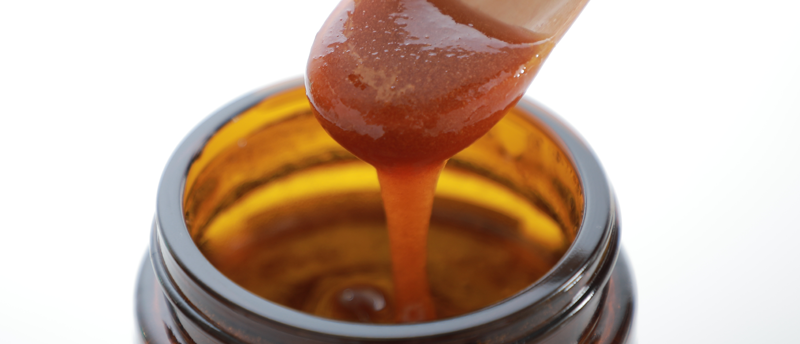
Manuka Honey and Deterioration
Honeybees increase the sugar concentration of the nectar they collect to over 80% by evaporating its moisture, creating fully matured honey, which can be preserved as food. Naturally matured honey has the remarkable property of remaining unchanged for an indefinite period. The high concentration causes osmotic pressure that draws water out of bacteria (lysis), making it impossible for them to survive. Additionally, honey contains the enzyme glucose oxidase, which is present in the saliva of bees. This enzyme breaks down disaccharides into monosaccharides and simultaneously produces hydrogen peroxide. Hydrogen peroxide (H₂O₂), also known as oxidol, has a strong oxidizing effect that provides powerful antibacterial properties.
Furthermore, TCN’s Manuka honey contains high concentrations of the unique antibacterial and antiviral active compound, methylglyoxal (MGO). This makes it more effective against bacteria compared to regular honey, ensuring that spoilage-related deterioration does not occur. Although unrelated to spoilage, MGO also irreversibly denatures viral proteins (DNA/RNA), preventing them from replicating.
Signs of Deterioration?
Natural raw honey contains many beneficial components. Among them, pollen acts as a crystallization seed, and factors such as glucose content and storage temperature promote crystallization. Various sizes of crystals may form, but there is no change in its composition. Additionally, due to enzymes and other beneficial components, changes in color, aroma, and other characteristics may occur during storage, which is also a feature of natural honey.
Heating and Deterioration
When honey is heated to high temperatures, the enzymes become inactive, and its beneficial components are reduced. If you want to warm honey for use, aim for a temperature around 45℃ as a guideline.
Storage Methods to Prevent Deterioration
There is likely no food in the world that doesn’t degrade over time. The conditions for preservation are crucial. Avoiding direct sunlight and blocking moisture are most important for long-term storage. In the case of honey, this allows it to be stored for extended periods at cool room temperatures. Honey became famous in 1913 when 3,300-year-old honey was found in an Egyptian tomb, suggesting that the preservation environment had been ideal by chance. It has recently been discovered that Manuka honey’s MGO content degrades over time depending on storage temperature. As a general guideline, storing it in the refrigerator is recommended if it will be kept for more than four months.
TCN Manuka honey is labeled with an expiration date as required by consumer protection regulations. However, by following the recommended storage methods, it can be used as a preserved food. Nowadays, many processed foods contain numerous additives that make them resistant to Deterioration and spoilage. In contrast, TCN products are sourced from the pristine natural environments of New Zealand and Brazil. We believe it is important for modern people to cherish and care for such natural products.
تعمل النحلات على رفع تركيز السكريات في الرحيق الذي تجمعه إلى أكثر من 80٪ من خلال تبخير الماء منه، لتُنتج عسلًا ناضجًا بالكامل يمكن حفظه غذاءً طبيعيًا لفترات غير محدودة. ويمتاز هذا العسل الناضج بخاصية مذهلة: فهو لا يتغيّر بمرور الزمن، إذ تمنع نسبة السكر العالية نمو البكتيريا بفضل الضغط الأسموزي الذي يسحب الماء من خلاياها فيتلفها.
كما يحتوي العسل على إنزيم الغلوكوز أوكسيداز الموجود في لعاب النحل، والذي يُحوّل السكريات الثنائية إلى سكريات أحادية، وينتج في الوقت نفسه بيروكسيد الهيدروجين (H₂O₂)، وهو مادة مؤكسدة قوية تمنح العسل تأثيره المضاد للبكتيريا. أما عسل المانوكا من TCN، فيتميّز بتركيز مرتفع من المركّب الفعّال والفريد الميثيل غليوكسال (MGO)، الذي يمتلك خصائص مضادة للبكتيريا والفيروسات تفوق العسل العادي. يساهم هذا المركّب في منع أي تلف أو تحلّل مرتبط بالفساد، كما يقوم بتثبيط البروتينات الفيروسية (DNA / RNA) بشكل لا رجعة فيه، مما يمنع تكاثر الفيروسات.
هل يتدهور العسل الطبيعي؟
يحتوي العسل الخام الطبيعي على العديد من المكوّنات المفيدة، ومن بينها حبوب اللقاح التي تعمل كنواة لتكوّن البلورات. ويؤدي كل من نسبة الغلوكوز ودرجة حرارة التخزين إلى تشكّل البلورات بدرجات وأحجام مختلفة، لكن دون أي تغيّر في التركيب الكيميائي للعسل. كما قد تتغير اللون والرائحة والقوام مع مرور الوقت نتيجة نشاط الإنزيمات والمكوّنات الحيوية، وهذا أمر طبيعي يُعبّر عن أصالة العسل الطبيعي.
الحرارة وتأثيرها على جودة العسل
عند تعرّض العسل لدرجات حرارة مرتفعة، تتعطّل الإنزيمات وتفقد المكوّنات النشطة جزءًا من خصائصها. لذلك، في حال الحاجة لتدفئته، يُنصح بألّا تتجاوز درجة الحرارة 45 درجة مئوية للحفاظ على فوائده.
طرق التخزين للحفاظ على الجودة
لا يوجد طعام في العالم يمكن أن يبقى دون تغيّر مع الزمن، ولكن ظروف التخزين هي العامل الأهم للحفاظ على الجودة. ينبغي تجنّب أشعة الشمس المباشرة والرطوبة لضمان حفظ العسل لفترات طويلة. ويمكن تخزين العسل في درجة حرارة الغرفة المعتدلة، حيث يتميّز بقدرته الطبيعية على البقاء دون تلف لسنوات.
وقد اشتهر العسل عالميًا عندما اكتُشف في عام 1913 داخل مقبرة مصرية عمرها 3300 عام، وكان لا يزال محفوظًا بشكل مثالي، مما يبرهن على قدرة العسل الفريدة على مقاومة الزمن. أظهرت الأبحاث الحديثة أن مستوى MGO في عسل المانوكا قد يتناقص تدريجيًا حسب درجة حرارة التخزين. لذلك، إذا كانت فترة التخزين ستتجاوز أربعة أشهر، يُنصح بحفظه في الثلاجة للحفاظ على نشاط مكوّناته الحيوية.
عسل TCN – نقاء الطبيعة بين يديك
يُوضع تاريخ انتهاء الصلاحية على منتجات TCN تماشيًا مع لوائح حماية المستهلك، لكن عند الالتزام بطرق التخزين الموصى بها، يمكن اعتبار عسل المانوكا غذاءً طبيعيًا محفوظًا يدوم طويلاً. في عالم اليوم، تمتلئ معظم الأطعمة المُصنّعة بالمواد الحافظة والإضافات الكيميائية التي تمنع تلفها، أما منتجات TCN، فهي تُستخلص من البيئات البكر في نيوزيلندا والبرازيل، حيث تمتزج نقاوة الطبيعة بروح النحل السليمة. نحن نؤمن بأن العودة إلى النقاء الطبيعي ليست ترفًا، بل ضرورة للحفاظ على الصحة والتوازن الحقيقي للإنسان.