
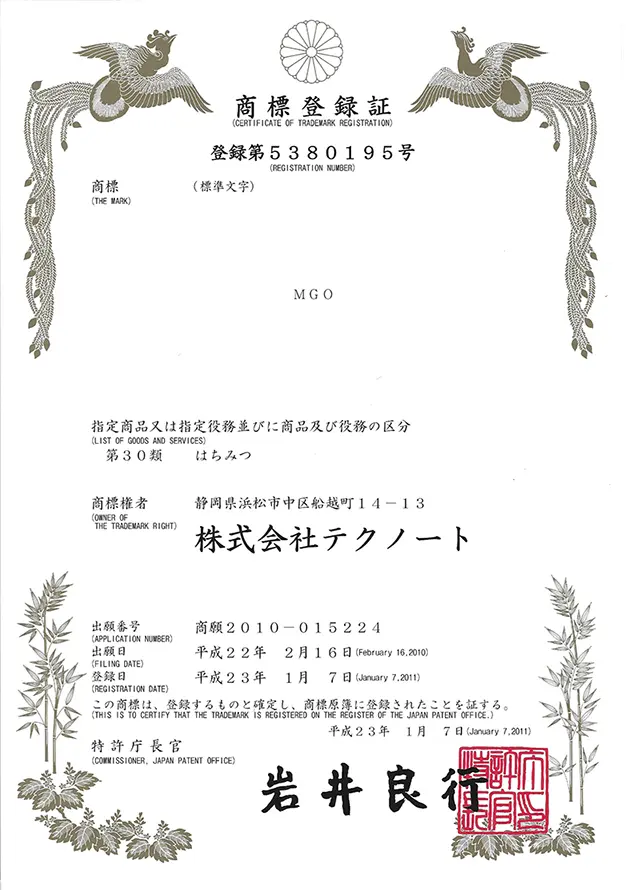
MGO is a registered trademark of TCN
MGO has been recognized as a registered trademark of TCN Co., Ltd. (formerly TECHNOTE) by the Japan Patent Office since 2011, specifically for honey.
منذ عام 2011، اعترفت المكتب الياباني للبراءات بـ MGO كعلامة تجارية مسجلة لشركة TCN Co., Ltd. (المعروفة سابقًا بـ TECHNOTE) بشكل حصري لعسل المانوكا.

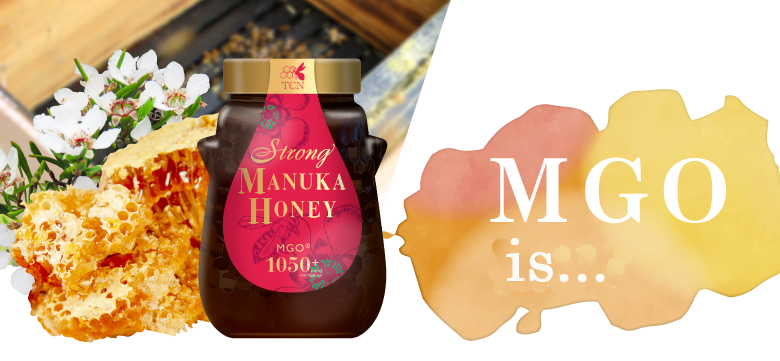
MGO (Natural Methylglyoxal) is a highly reactive substance derived from glucose with a methyl group attached to glyoxal, characterized by its strong activity. It is widely present in all living organisms on Earth and is also produced within the body. Although it is found in trace amounts in foods, this means that methylglyoxal itself is not unique to Manuka honey and can be found in other sources as well.
يتواجد هذا المركب في جميع الكائنات الحية على الأرض، ويُنتج كذلك داخل جسم الإنسان. كما يمكن العثور عليه بكميات ضئيلة في بعض الأطعمة.
ومع ذلك، فإن القيمة الاستثنائية لعسل المانوكا تكمن في تركيز MGO الطبيعي العالي فيه بشكل فريد، وهو ما يميز منتجات TCN ويجعلها أيقونة للثقة والجودة الفاخرة.
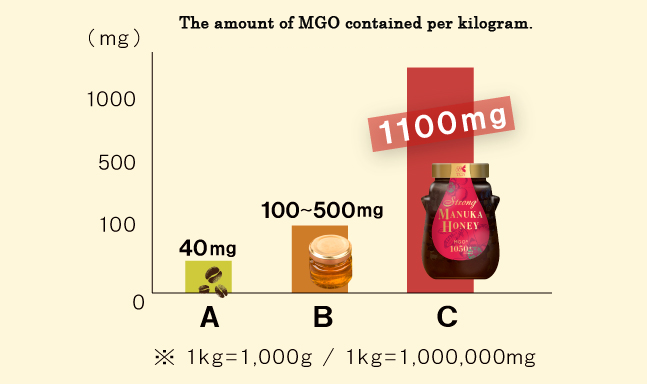
A. Food Products (such as Coffee, Cocoa, etc.)
B. Regular Manuka Honey
C. TCN Manuka Honey
30 Times More
An Astonishing value!
The amount of methylglyoxal in food products, such as coffee and cocoa, is typically around 40 mg per kilogram at most. In contrast, TCN STRONG MANUKA HONEY contains approximately 1,100 mg/kg of MGO (methylglyoxal per kilogram of Manuka honey) in its highest-grade products- nearly 30 times the amount found in other foods. This is an extraordinary value that is rarely seen in other food products.
Manuka honey with an MGO value exceeding 1,000 mg/kg has traditionally been a very rare honey. Due to recent global abnormal weather patterns, the harvest has become highly unstable. In future production batches, the MGO value may fluctuate by a few percent above or below the MGO 1100 benchmark.
تحتوي المنتجات الغذائية الأخرى مثل القهوة والكاكاو عادةً على ما لا يزيد عن 40 ملغ من الميثيل غليوكسال (MGO) لكل كيلوغرام.
في المقابل، يحتوي عسل المانوكا القوي من TCN (STRONG MANUKA HONEY) على ما يقارب 1100 ملغ/كغ من الميثيل غليوكسال في منتجاته الأعلى درجة – أي ما يقارب 30 ضعفًا مما يوجد في الأطعمة الأخرى. هذه قيمة نادرة واستثنائية لا تكاد تُرى في أي منتج غذائي آخر.
إن عسل المانوكا الذي تتجاوز قيمة MGO فيه 1000 ملغ/كغ يُعتبر تقليديًا من أندر أنواع العسل في العالم. ومع ذلك، وبسبب التغيرات المناخية العالمية غير الطبيعية في السنوات الأخيرة، أصبحت كميات الحصاد غير مستقرة.
في الدُفعات المستقبلية من الإنتاج، قد تتفاوت قيمة MGO بنسبة قليلة أعلى أو أقل من مستوى 1100، مما يعكس الطبيعة الحية والمتغيرة لهذا الكنز الطبيعي الفريد.
In fact, ultra-high activity grade products are rarely sold even in New Zealand, the country of origin.
This is because manufacturers find it more profitable to produce blended products by mixing lower-grade honey with higher-grade honey to increase the activity level to some extent, rather than selling 100% pure, high-grade products. This approach makes sense both for sellers and buyers, as it balances profitability and supply.
في الواقع، فإن منتجات عسل المانوكا ذات الدرجة فائقة النشاط نادرًا ما تُباع حتى في نيوزيلندا، بلد المنشأ.
ويرجع ذلك إلى أن العديد من الشركات تفضّل إنتاج عسل ممزوج عبر خلط العسل منخفض الدرجة مع كميات من العسل العالي الدرجة، مما يرفع مستوى النشاط إلى حد ما. هذا النهج يُعتبر أكثر ربحية للمُنتجين، كما أنه أكثر ملاءمة للمستهلكين من حيث السعر وتوافر الكميات.
إلا أن هذا يعني أن العسل النقي بنسبة 100% ذو الدرجة الفائقة لا يكاد يُطرح في الأسواق، ليبقى في مصاف الكنوز النادرة التي لا يصل إليها سوى القلائل من عشّاق التميز والفخامة.
About MGO Content Measurement Tests
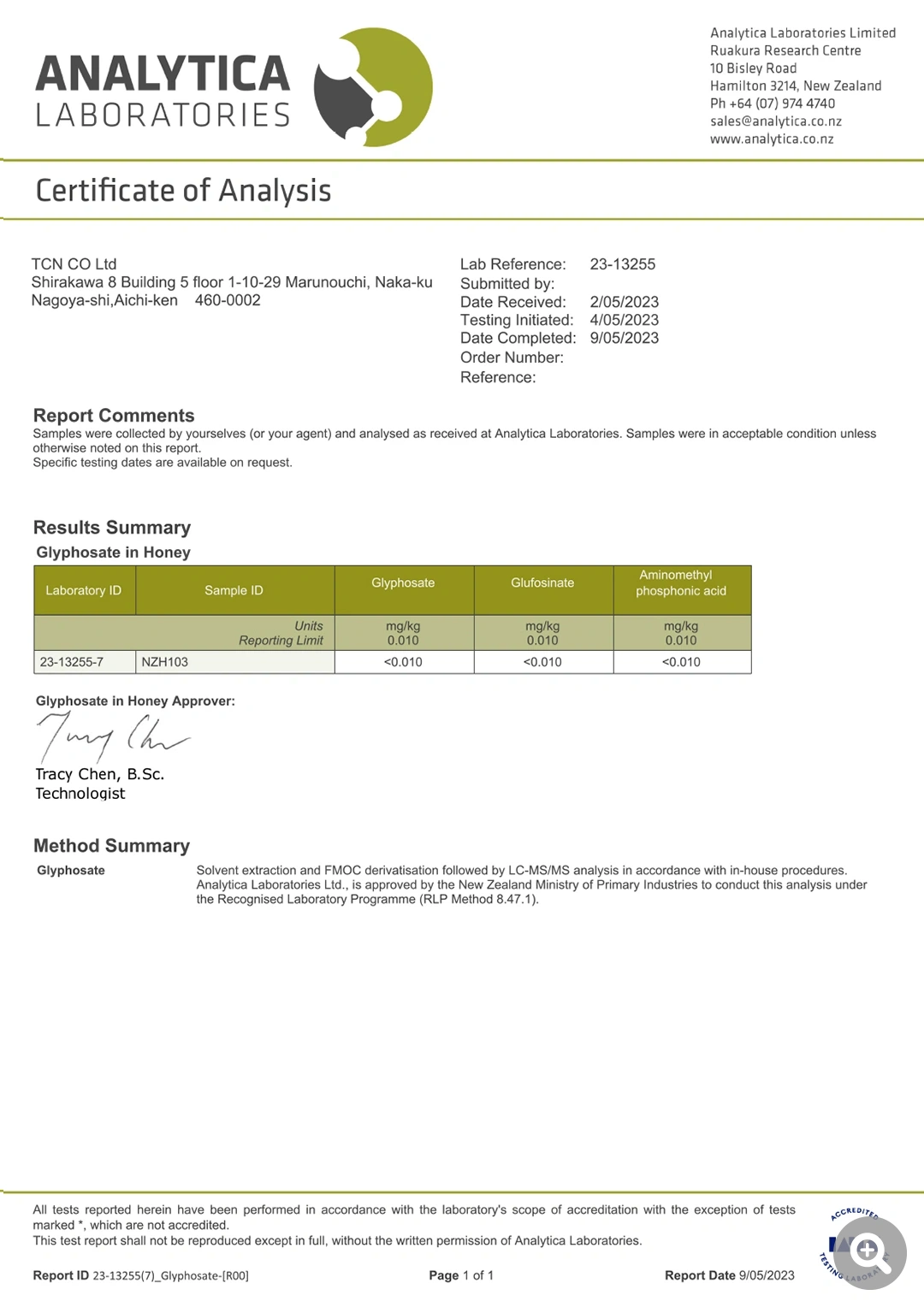
The First Company to Provide Analysis Reports with Products
We determine the grade rank of our products through tests for natural methylglyoxal (MGO) content. We include an “MGO Content Analysis Report and Japanese Translation” with every bottle to ensure the reliability of our products. TCN has been including analysis reports with Manuka honey products since April 2010, and we are the original company to do so. Our MGO content measurement tests are conducted by analysis institutions officially accredited by the New Zealand government. Among them, we use the highly reliable and actively advancing “ALS Food and Environmental NZ.,” where the measurements are performed with strict accuracy.
الشركة الأولى التي تقدم تقارير تحليلية مع كل منتج
نقوم بتحديد التصنيف الفعلي لمنتجاتنا من خلال اختبارات دقيقة لقياس محتوى مادة الميثيل غليوكسال الطبيعية (MGO). ولضمان أعلى درجات المصداقية والشفافية، نُرفق مع كل عبوة “تقرير تحليل لمحتوى MGO مع ترجمته إلى اليابانية”.
لقد التزمت TCN منذ أبريل 2010 بإصدار هذه التقارير مع عسل المانوكا، مما يجعلنا الشركة الرائدة والأولى عالمياً في هذا المجال.
يتم إجراء اختبارات قياس محتوى MGO في مؤسسات تحليلية معتمدة رسمياً من حكومة نيوزيلندا. ومن بين هذه المؤسسات، نعتمد على المختبر المرموق “ALS Food and Environmental NZ” الذي يُعرف بدقته الصارمة وتقدمه المستمر، مما يضمن نتائج موثوقة تعكس الفخامة والجودة الحقيقية لمنتجاتنا.
How MGO is Produced

dihydroxyacetone
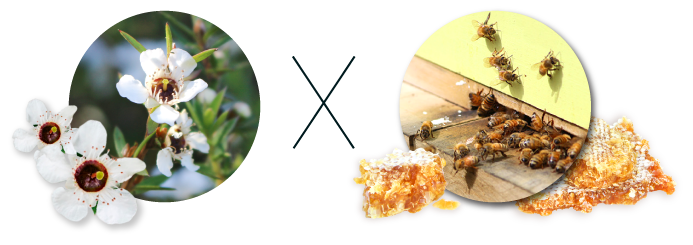
Manuka nectar × Hive environment
The production of methylglyoxal (MGO), a unique component of Manuka honey, requires dihydroxyacetone, which is found in the nectar of the Manuka tree flowers. It is not an exaggeration to say that this dihydroxyacetone is essential to the essence of Manuka honey. MGO is produced only when this dihydroxyacetone is present along with the environment provided by honeybees and their hives.

Incanum Variety Manuka Trees
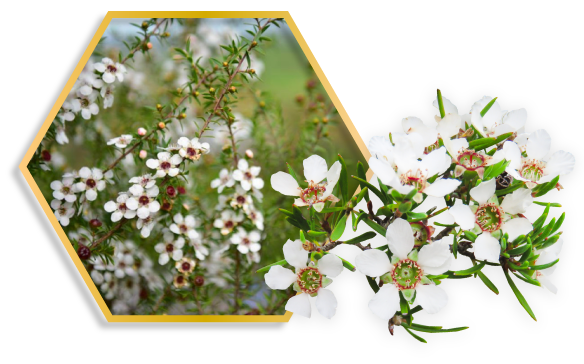
Not all types of Manuka trees are suitable. Our beekeeping is conducted in a mountainous region of New Zealand’s North Island, covering approximately 200 acres and home to an estimated 1.5 million Leptospermum scoparium (Incanum) trees. TCN’s Manuka honey is derived from the nectar of the Incanum variety, which is rich in dihydroxyacetone. The key to the strength of activity lies in the Incanum variety of Manuka trees. This flower nectar contains a high concentration of dihydroxyacetone, a precursor to the unique component of Manuka honey, methylglyoxal (MGO). Bees transport this nectar to their hives, where it is stored as honey.
النقطة الأولى: ثنائي هيدروكسي الأسيتون
رحيق المانوكا × بيئة الخلية
يتطلب إنتاج الميثيل غليوكسال (MGO)، وهو المكوّن الفريد في عسل المانوكا، وجود مادة ثنائي هيدروكسي الأسيتون (DHA) الموجودة في رحيق أزهار شجرة المانوكا. ولا يُعدّ من المبالغة القول إن هذه المادة هي العنصر الجوهري في جوهر عسل المانوكا نفسه. يتكوّن الـ MGO فقط عندما يتوافر هذا الثنائي هيدروكسي الأسيتون مع البيئة الطبيعية التي توفّرها النحلات وخلاياها.
ليست جميع أنواع أشجار المانوكا مناسبة لإنتاج العسل الفاخر. تتم تربية نحل TCN في منطقة جبلية في الجزيرة الشمالية من نيوزيلندا، تمتد على مساحة تقارب 200 فدان وتضم حوالي 1.5 مليون شجرة من نوع Leptospermum scoparium (إنكانوم).
يُستخلص عسل المانوكا من TCN من رحيق أزهار الإنكانوم، وهو النوع الغني بمركب ثنائي هيدروكسي الأسيتون — العنصر الأساسي في تكوين الميثيل غلايُوكسال (MGO)، المكوّن الفريد الذي يمنح عسل المانوكا قوته الاستثنائية.
إن سر فعالية هذا العسل يكمن في أزهار الإنكانوم التي تحتوي على تركيز مرتفع من هذا المركب النادر. يقوم النحل بجمع هذا الرحيق الثمين ونقله إلى خلاياه، حيث يُخزَّن ويتحوّل إلى عسل مانوكا نادر الوجود يجمع بين نقاء الطبيعة وروح الحرفة الرفيعة.
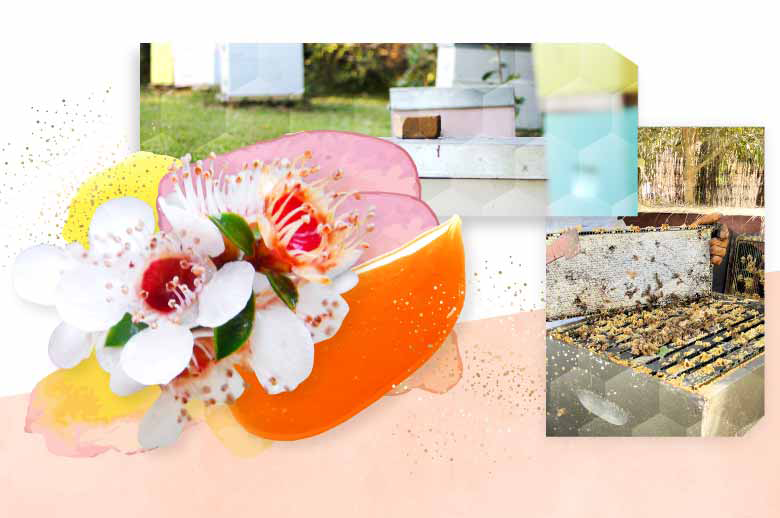
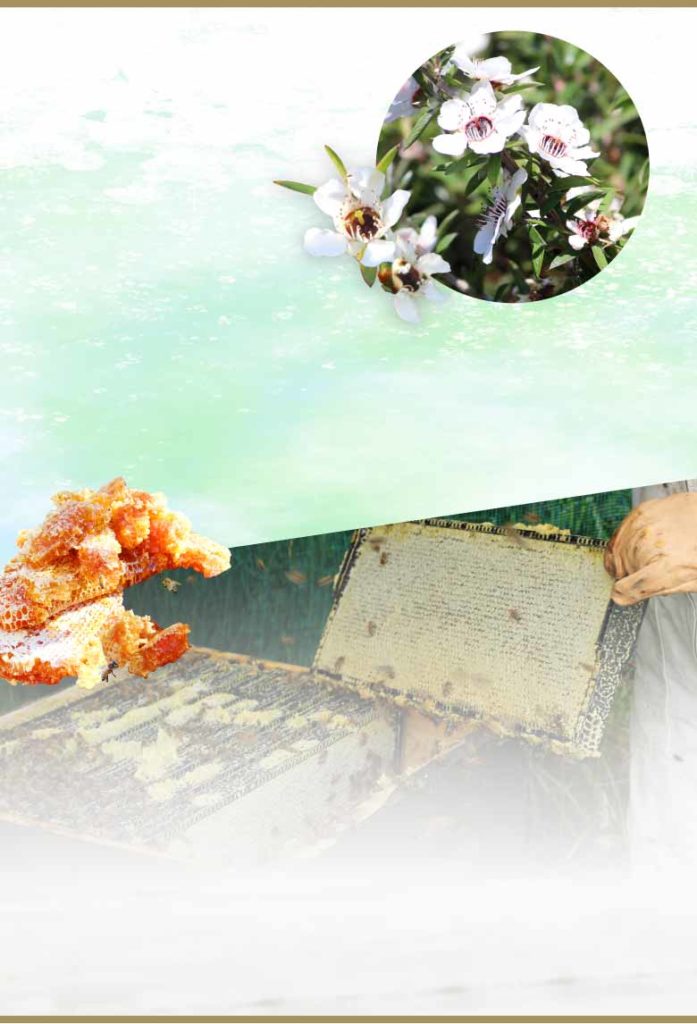
The concentration of dihydroxyacetone (DHA) is crucial, as bees slowly raise the temperature of the honey in the hive to 37–39°C, which then converts into MGO. It has been confirmed in recent years that dihydroxyacetone is a precursor to MGO, meaning it is a substance that transforms into MGO. Therefore, MGO itself is not originally present in Manuka tree nectar. The MGO is produced from Manuka nectar that bees gather under the conditions within the hive. As supporting evidence, when dihydroxyacetone is added into honey that does not naturally contain it and then heated to approximately the body temperature of a honeybee, MGO is gradually produced.
Additionally, while harmful bacteria are sensitive to the strong activity of MGO, beneficial bacteria are unaffected because they possess enzymes that break down MGO. This suggests that harmful and beneficial bacteria have different reproductive conditions and environments. Therefore, antibiotics and antibacterial drugs, which generally affect a wide range of bacteria, can also harm beneficial bacteria. However, MGO does not have this drawback, making it a significant feature that distinguishes it from traditional medications.
وكدليل داعم، عند إضافة ثنائي هيدروكسي الأسيتون إلى نوع من العسل لا يحتوي عليه بشكل طبيعي ثم تسخينه إلى درجة حرارة قريبة من حرارة جسم النحلة، يتكوّن MGO تدريجياً.
إن عسل المانوكا ليس مجرد رحيق نباتي، بل هو تحفة طبيعية نادرة تكتمل فقط بفضل العمل الدقيق للنحل وانسجامه مع أسرار الطبيعة.
بالإضافة إلى ذلك، في حين أن البكتيريا الضارة حساسة للنشاط القوي لمركب MGO، فإن البكتيريا النافعة تبقى بمنأى عن تأثيره بفضل امتلاكها لإنزيمات قادرة على تفكيك MGO. وهذا يشير إلى أن البكتيريا الضارة والمفيدة تعيش في ظروف بيئية مختلفة وتخضع لشروط تكاثر متباينة.
وعلى عكس المضادات الحيوية والأدوية المضادة للبكتيريا التي تؤثر عادةً على طيف واسع من البكتيريا، بما في ذلك البكتيريا النافعة، فإن MGO يخلو من هذا القصور. وهذه الميزة الفريدة هي ما يميز عسل المانوكا عن العلاجات التقليدية، ويجعل منه هدية طبيعية فائقة القيمة تتفرد بها الطبيعة.

Measurement Methods Before MGO Discovery
The activity level of Manuka honey is now determined by the MGO content. However, before MGO was identified, there were various methods for testing the activity levels of Manuka honey. One such method was known as the “halo method,” where the antibacterial strength of Manuka honey was compared to that of a disinfectant (phenol) by observing its effect on bacteria cultured at specific concentrations. This method is significantly different from the current MGO content measurement test.
For example, the size of the halo (a clear zone where bacteria do not grow) around a sample of Manuka honey is measured when applied to bacteria cultured on the medium (the base used for cultivation). The same test is conducted with diluted phenol, a disinfectant, on another medium under the same conditions for comparison. However, this relies on human visual judgment, which can only be described as a rough assessment method.
Additionally, discrepancies can arise due to the quality of the phenol solution used in the measurement, the sensitivity of the test bacteria to the phenol solution, the effectiveness of the enzyme catalase used to remove hydrogen peroxide, and the skill level of the person conducting the halo method.
Ideally, the same sample should be tested multiple times across various analytical institutions, and the average value of the results should be used. However, this is not being done due to the significant variability in the numerical outcomes. In the traditional method of comparing phenol disinfectant with Staphylococcus aureus using the halo method, there was considerable variability in the measurement results, with differences ranging from ±25% to over 40%. As a result, the reliability of this method was lost after the discovery of MGO.
The New Zealand Ministry for Primary Industries (MPI) recognizes only the measurement of MGO content as the official standard.
في الوقت الحاضر يتم تحديد مستوى نشاط عسل المانوكا بناءً على محتوى MGO. غير أنه قبل التعرف على هذا المركب الفريد، استُخدمت عدة طرق لقياس قوة النشاط في عسل المانوكا. ومن أبرزها ما كان يُعرف باسم “طريقة الهالة”، حيث تتم مقارنة قوة العسل المضادة للبكتيريا بمطهر الفينول من خلال مراقبة تأثيره على البكتيريا المزروعة بتركيزات محددة. وهذه الطريقة تختلف اختلافاً جوهرياً عن القياس الدقيق القائم على محتوى MGO اليوم.
فعلى سبيل المثال، يُقاس حجم الهالة – أي المنطقة الشفافة التي لا تنمو فيها البكتيريا – حول عينة من عسل المانوكا عند تطبيقها على بكتيريا مزروعة في وسط غذائي مخصص. ثم تُجرى التجربة نفسها باستخدام محلول مخفف من الفينول كمطهر على وسط آخر في ظروف متماثلة للمقارنة. لكن هذه الطريقة تعتمد على التقدير البصري البشري فقط، وهو ما يجعلها أقرب إلى تقييم تقريبي يفتقر إلى الدقة.
إضافة إلى ذلك، قد تظهر فروقات في النتائج بسبب جودة محلول الفينول المستخدم، أو حساسية البكتيريا المختبرة تجاهه، أو فاعلية إنزيم الكاتالاز المستخدم لإزالة بيروكسيد الهيدروجين، وكذلك مهارة الشخص الذي يُجري الاختبار بطريقة الهالة.
ومن الناحية المثالية، ينبغي اختبار العينة نفسها عدة مرات في مؤسسات تحليلية مختلفة، ثم اعتماد متوسط النتائج. إلا أن ذلك لم يكن يُطبّق فعلياً بسبب التفاوت الكبير في القيم الرقمية. ففي الطريقة التقليدية التي اعتمدت مقارنة الفينول مع Staphylococcus aureus عبر “طريقة الهالة”، ظهرت فروقات واسعة في النتائج تراوحت بين ±25% إلى أكثر من 40%. ونتيجة لذلك، فقدت هذه الطريقة مصداقيتها بعد اكتشاف MGO الذي وفّر معياراً علمياً دقيقاً لا يقبل الشك.
تُقرّ وزارة الصناعات الأولية في نيوزيلندا (MPI) بأن المعيار الرسمي الوحيد المعتمد هو قياس محتوى MGO.
MGO and UMF
For decades, researchers have debated the possibility that in addition to hydrogen peroxide, which is commonly found in regular honey and produced by the enzyme glucose oxidase, there may be other yet-to-be-identified components contributing to the unique antibacterial properties of Manuka honey.
However, researchers were unable to identify the exact chemical substance responsible for this unique property. Despite this, traditional analysis methods (such as phenol-based comparative tests, NPA, and UMF) were quickly introduced for commercial purposes and used to classify Manuka honey as a premium product based on its antibacterial analysis.
Moreover, the fact that products claiming to be Manuka honey far exceeded the actual production volume led to issues with false claims of activity levels, escalating to international lawsuits. This raised concerns that not only honey but the global reputation of New Zealand’s entire primary industry could be at risk. In response, the New Zealand Ministry for Primary Industries (formerly the Ministry of Agriculture) invalidated many previous labeling methods (such as NPA, TA, and UMF). It established MGO as the sole official indicator and mandated its labeling, while rejecting traditional activity tests. Consequently, Manuka honey products exported from New Zealand are now legally required to label their methylglyoxal (MGO) content.
لقد ناقش الباحثون لعقود طويلة إمكانية أن يكون هناك، إلى جانب بيروكسيد الهيدروجين – وهو عنصر شائع في العسل العادي وينتج عن إنزيم غلوكوز أوكسيداز – مكونات أخرى غير معروفة تسهم في الخصائص الفريدة المضادة للبكتيريا في عسل المانوكا.
غير أنّ العلماء لم يتمكنوا من تحديد المادة الكيميائية الدقيقة المسؤولة عن هذه الخاصية المتميزة. ورغم ذلك، فقد تم اعتماد طرق تحليل تقليدية (مثل الاختبارات المقارنة باستخدام الفينول، وNPA، وUMF) لأغراض تجارية، واستخدمت لتصنيف عسل المانوكا كمنتج فاخر بناءً على تحليلات النشاط المضاد للبكتيريا.
ومع مرور الوقت، تجاوزت المنتجات التي ادّعت أنها “عسل مانوكا” بكثير حجم الإنتاج الفعلي، مما أدى إلى ظهور ادعاءات مضللة حول مستويات النشاط، وانتهى الأمر بنزاعات قضائية دولية. وقد أثار ذلك مخاوف حقيقية من أن سمعة نيوزيلندا بأكملها في قطاعها الزراعي الأولي يمكن أن تتعرض للخطر.
رداً على ذلك، قامت وزارة الصناعات الأولية في نيوزيلندا (المعروفة سابقاً بوزارة الزراعة) بإلغاء العديد من طرق التصنيف القديمة مثل NPA وTA وUMF، واعتمدت MGO كمؤشر رسمي وحيد ملزم، ورفضت جميع الاختبارات التقليدية للنشاط. وبموجب هذا القرار، أصبح من القانوني أن تُصدّر منتجات عسل المانوكا من نيوزيلندا فقط مع وضع محتوى MGO على الملصق كمعيار للجودة والأصالة.
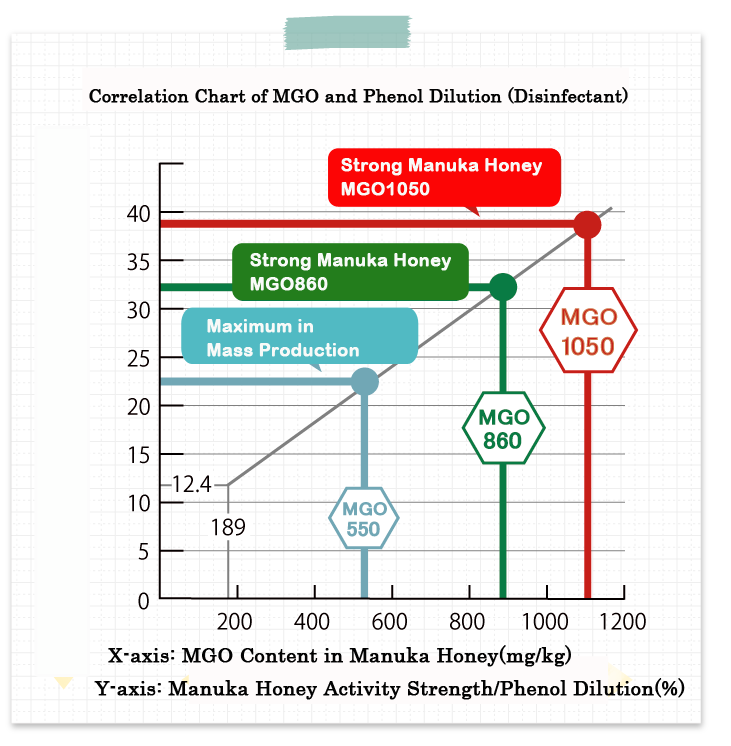
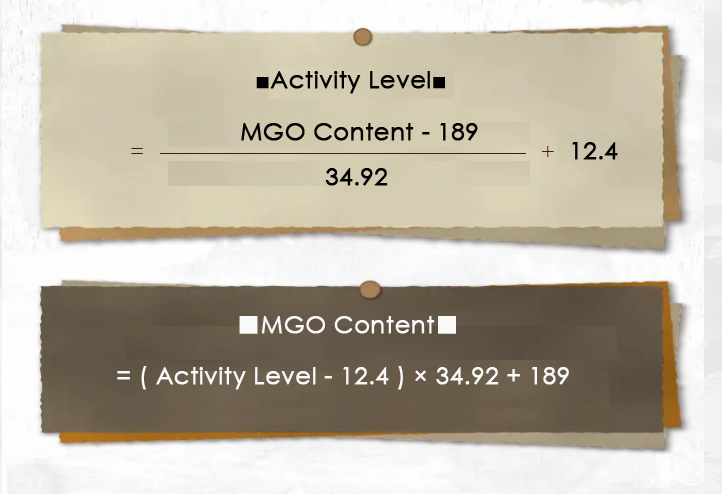
The correlation between MGO and activity strength
The activity strength (equivalent to UMF) can be calculated based on the MGO value.
يمكن حساب مستوى الفعالية (المكافئ لمعيار UMF) استناداً إلى قيمة MGO الموجودة في العسل.
The Reality of MGO Labels
Manuka honey is subject to a wide range of quality standards, each interpreted differently by various companies and organizations. When you trace the sources of this information, they often lead back to the Biological Sciences Institute at the University of Waikato in New Zealand. However, many of these companies and organizations tend to interpret this information in ways that are most advantageous to them or, in some cases, they skillfully use incorrect data in their presentations. Such incorrect interpretations have become widespread among consumers, leading us to feel a strong sense of urgency about the future of Manuka honey and the potential for consumer misunderstanding. Below, we present the truth with full conviction.
يخضع عسل المانوكا لمجموعة واسعة من معايير الجودة، غير أن تفسير هذه المعايير يختلف باختلاف الشركات والمؤسسات. وعند تتبع مصادر هذه المعلومات، نجد أنها غالباً ما تعود إلى معهد العلوم البيولوجية في جامعة وايكاتو بنيوزيلندا.
إلا أن العديد من هذه الجهات تميل إلى تأويل المعلومات بما يخدم مصالحها الخاصة، بل إن بعضهم يستخدم بيانات غير دقيقة بمهارة في عروضه التسويقية. ومع انتشار مثل هذه التفسيرات الخاطئة بين المستهلكين، نشعر بقلق عميق إزاء مستقبل عسل المانوكا واحتمال وقوع الجمهور في دائرة الفهم المضلل.
ومن هذا المنطلق، نضع بين أيديكم الحقيقة الكاملة وبكل يقين، إيماناً منا بأن عسل المانوكا يستحق أن يُقدَّم للعالم بصفائه ونقائه الحقيقيين.

Molan, Peter C. (Professor at the National Institute of Biological Sciences, Waikato University, and former Director of the Honey Research Institute) The true relationship of NPA(Non Peroxide Activity) and MG levels.
The true relationship of NPA and MG levels
The following nine points are extracts of the most important parts from the paper, summarized in an easy-to-understand manner. Please be sure to read them.
فيما يلي تسعة نقاط رئيسية مستخلصة من البحث العلمي، تمت صياغتها بطريقة مبسطة لسهولة الفهم والاستيعاب. نرجو منكم التفضل بقراءتها بعناية، لما تحمله من أهمية بالغة في فهم الجوهر الحقيقي لقيمة عسل المانوكا.
Points of Discussion 1: The graph is a curve and not a straight line

Points of Discussion 2: The data points should not have a curve fitted to the total

Points of Discussion 3: Another reason why the graph should have straight lines

Points of Discussion 4: Both should show perfect straight lines

Points of Discussion 5: The correlation graph between MGO and NPA

Points of Discussion 6: The correlation values appear to be incorrect

Points of Discussion 7: The important points to keep in mind

Points of Discussion 8: The best method to demonstrate the antibacterial properties of Manuka honey

Points of Discussion 9: Assessment by MGO content


Which Graphs?
The graph (C) below is officially published by the UMF Honey Association. Compared to graphs (A) and (B), which are presented by scholars and researchers, graph (C) curves significantly downward. This graph (C) is an intentionally exaggerated representation, designed to make it appear that there is a higher MGO content when converting UMF numbers to MGO. However, it lacks academic basis and is an incorrect graph.
إن الرسم البياني (C) أدناه صادر رسمياً عن جمعية عسل UMF. وعند مقارنته بالرسمين (A) و(B) اللذين قدّمهما علماء وباحثون، نجد أن منحنى الرسم (C) ينحدر بشكل ملحوظ.
هذا الرسم (C) هو تصوير مبالغ فيه عمدًا، صُمّم ليُظهر أن هناك محتوى أعلى من الـ MGO عند تحويل أرقام UMF إلى MGO. غير أن هذا التمثيل يفتقر إلى الأساس الأكاديمي، وهو رسم غير صحيح ولا يعكس الحقيقة العلمية.
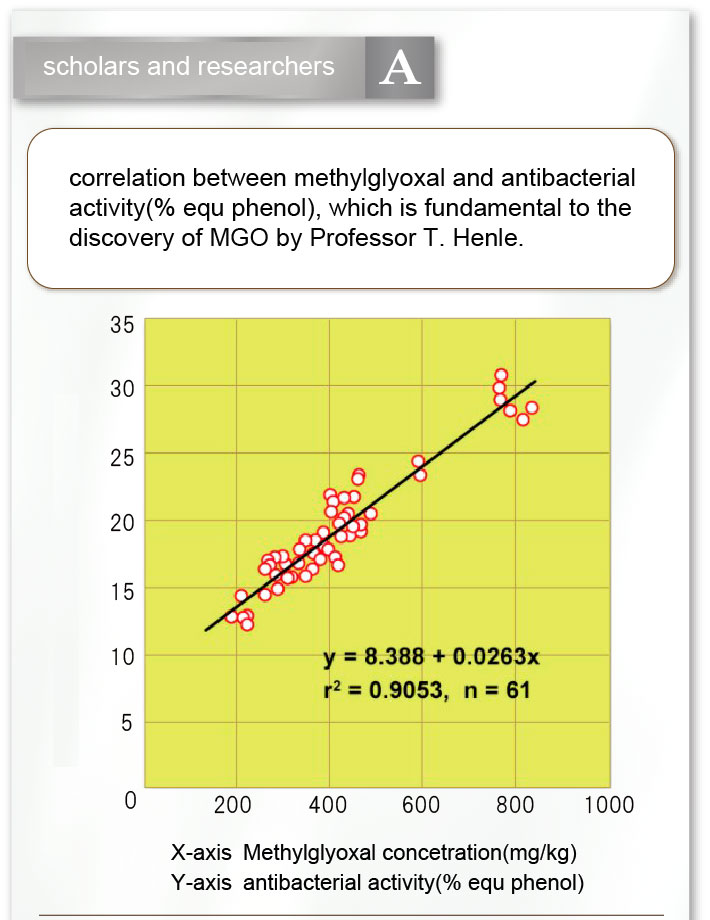
The phenol dilution rate on the y-axis intersects the linear line at 8.388 when x = 0, while the slope for the x-axis (MGO) is 0.0263. This indicates that the graph approaches a nearly perfect linear relationship. r² shows a correlation of 90.53% between the graph and the samples, with n = 61 representing the number of tested specimens.
For example, when calculating the phenol dilution rate for MGO 600 mg/kg:
600 × 0.0263 + 8.388 = 24.168,
thus the phenol dilution rate is 24.168%.
كما يُظهر معامل التحديد r² وجود ترابط بنسبة 90.53% بين الرسم البياني والعينات، حيث يمثل n = 61 عدد العينات التي خضعت للاختبار.
على سبيل المثال، عند حساب معدل التخفيف بالفينول لمستوى MGO 600 mg/kg:
600 × 0.0263 + 8.388 = 24.168،
وبذلك يكون معدل التخفيف بالفينول 24.168%.
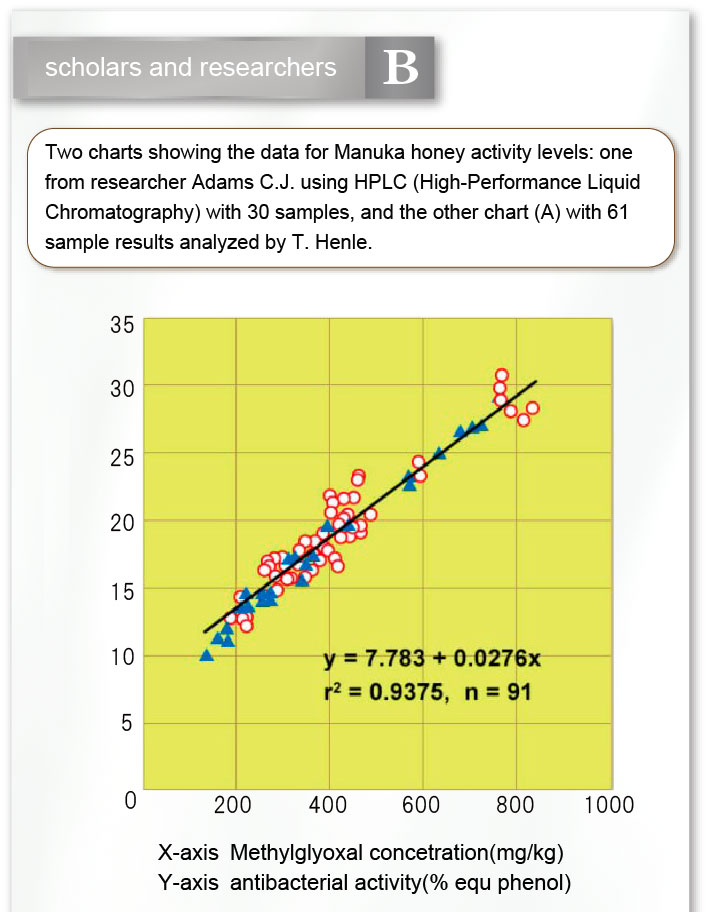
This graph overlays the results of 30 specimens published by Adams et al. (2008) with Professor T. Henle’s Graph A, and it is evident that the coordinates align perfectly. The remarkable concordance between these two independent datasets leads to the conclusion that MGO is a unique antibacterial compound abundantly present in New Zealand Manuka honey and is directly associated with the clear antibacterial activity of these samples.
MGO can be considered an appropriate measure to indicate the antibacterial level of commercial products.
By Professor T.Henle
Adams, C. J. Boult, C. H. . Deadman, B J. Farr, J. M., Grainger, M. N. c., Manley-Harris, M.,
et al. (2008). Isolation by HPLC and characterisation of the bioactive fraction of New Zealand
manuka (Leptospermum scoparium) honey.
وبذلك يمكن اعتبار MGO مقياساً مناسباً وموثوقاً لتحديد مستوى الفعالية المضادة للبكتيريا في المنتجات التجارية.
بقلم البروفيسور ت. هنله
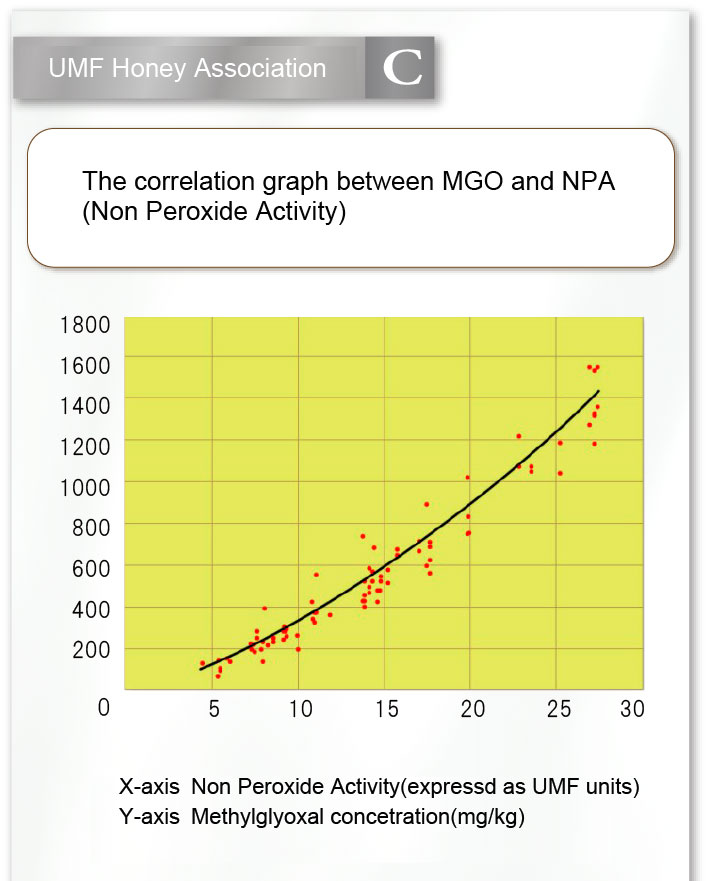
This graph was published by the UMF Honey Association. Unlike Graphs A and B, it shows a pronounced curve. This contradicts the linear correlation between MGO and the antibacterial properties of Manuka honey. What this implies is that the graph was constructed to emphasize the extent to which UMF values can be converted into higher levels of MGO.
The New Zealand Ministry for Primary Industries (MPI) recognizes only the measurement of MGO content as the official standard.
وتعترف وزارة الصناعات الأولية في نيوزيلندا (MPI) بقياس محتوى MGO فقط كمعيار رسمي.